Drains All Over the House Slow at the Same Time? Why It Points to the Main Line
Quick Answer: When every drain in the house slows down at the same time, the problem is usually not the individual fixtures, it's the main sewer line that all of them empty into. A clog, tree-root intrusion, grease buildup, or a collapsed or bellied pipe in the main line backs up the whole house. The telltale signs are multiple fixtures affected together, gurgling, and the lowest drains (like a basement floor drain or first-floor toilet) backing up first. This needs prompt attention before it becomes a sewage backup.
One slow drain is annoying but normal, a hair clog in a sink, a sluggish shower. But when the sinks, the tubs, the toilets, and the floor drains all slow down around the same time, that is a different and more serious story. It is easy to start plunging fixtures one by one, but when everything is affected together, the problem is almost never the fixtures themselves.
The reason is that every drain in your home empties into one shared pipe: the main sewer line that carries all the wastewater out to the sewer or septic system. When that main line is blocked or failing, it backs everything up at once. So house-wide slow drains are usually the main line waving a flag, and it is worth understanding what that means, because a main-line problem left alone tends to end in a sewage backup nobody wants. Here is what is going on beneath your house and why it deserves prompt attention.
Why House-Wide Slow Drains Point to the Main Line
To see why this points to the main line, picture how your home's drains are arranged. Each fixture, every sink, tub, shower, and toilet, has its own drain, and those all connect into larger branch lines, which all join the single main sewer line that leaves the house. Everything funnels into that one pipe.
So if a single fixture is slow, the clog is usually local, in that fixture's own drain or trap. But if many fixtures slow down together, the common point they all share, the main line, is where the problem has to be. A blockage in the main line restricts the flow for everything upstream of it, so the whole house drains poorly at once. That is the logic that makes house-wide slow drains such a clear signal: when the symptom is everywhere, the cause is at the shared pipe they all rely on.
This is why plunging individual fixtures does not help when the main line is the issue. The fixtures are fine; the highway they all drain into is jammed.
The Telltale Signs It's the Main Line
A few specific signs distinguish a main-line problem from a bunch of unrelated fixture clogs.
Multiple fixtures affected at once
The defining sign. Several drains slowing or backing up together, rather than one isolated fixture, points to the shared main line.
The lowest fixtures back up first
Wastewater backs up at the lowest points first because that is where it pools when it cannot get out. A basement floor drain, a first-floor toilet, or a basement shower backing up is a classic main-line sign.
Gurgling and air
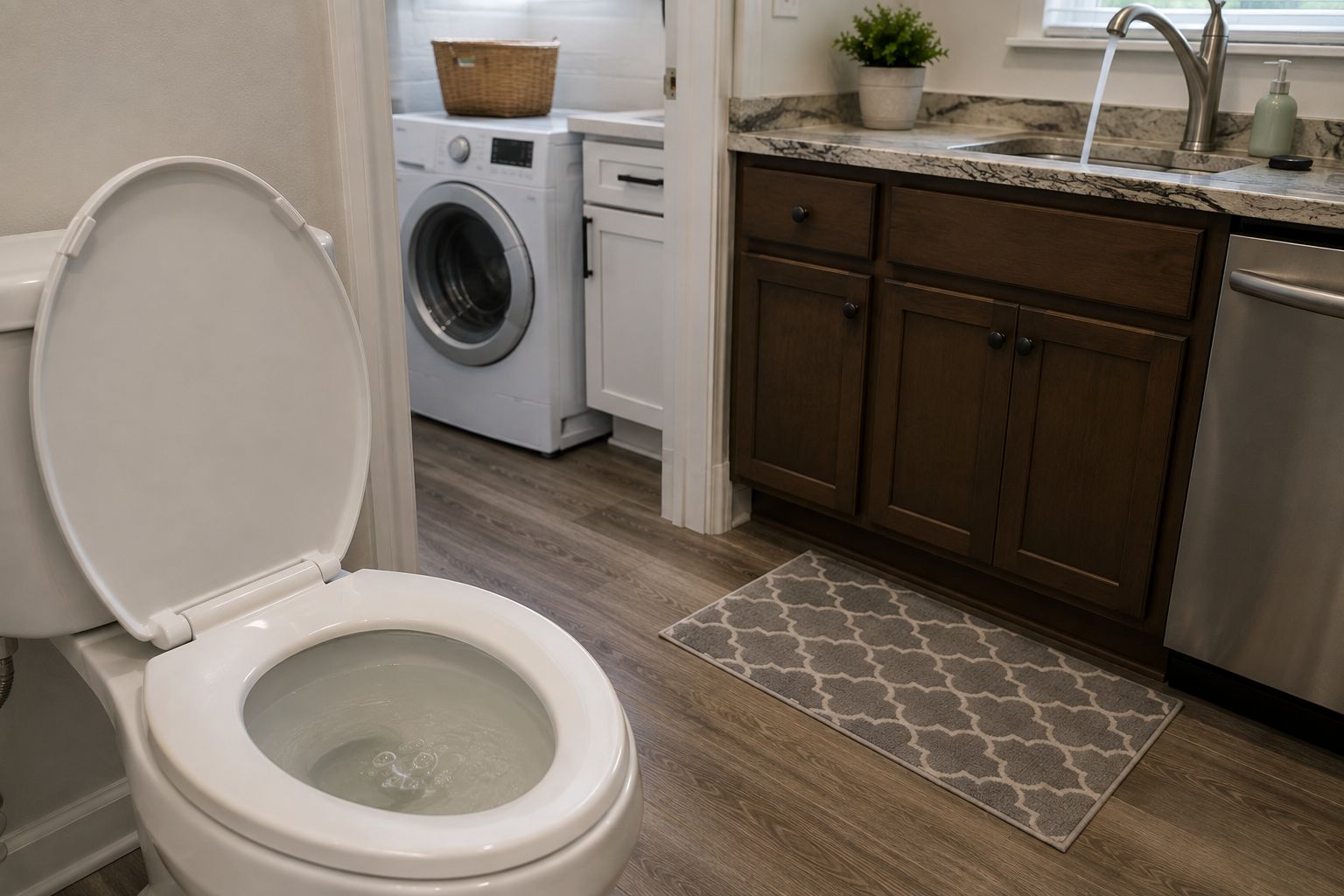
When the main line is restricted, water and air get displaced in unexpected ways. You might hear gurgling from a drain or toilet when you run water elsewhere, or see the toilet water level rise or bubble when the washing machine drains or another fixture is used. Those cross-connections, one fixture reacting to another, signal a shared blockage.
Backups when using water heavily
Running the washing machine, dishwasher, or several fixtures at once may trigger a backup somewhere, because the volume overwhelms the restricted main line.
Sewage odor
A sewer smell in the house or around the lowest drains can accompany a main-line problem.
When you see several of these together, especially multiple fixtures plus a low-point backup, the main line is the likely culprit, and it is time to treat it as more than a simple clog.
What's Actually Blocking the Main Line
Main-line problems come from a handful of common causes, and knowing them explains why the fix is different from a fixture clog.
Tree-root intrusion
Roots are drawn to the moisture and nutrients in sewer lines and work their way in through joints and small cracks, then grow into a mass that snags debris and blocks flow. In an established neighborhood with mature trees, roots are one of the most common main-line culprits.
Grease and buildup
Grease, soap, and solids that get washed down over the years coat and narrow the main line until flow chokes down. This builds gradually, which is why the slowdown can seem to creep up on the whole house.
Flushed items and debris
Wipes (even "flushable" ones), hygiene products, and other items that should not go down the toilet snag in the line and build a blockage.
A bellied, cracked, or collapsed pipe
Older pipes can sag (a "belly" that collects waste), crack, or partially collapse, especially with ground shifting or age. These structural problems trap waste and restrict flow, and they need more than clearing, they need the pipe addressed.
The takeaway is that a main-line blockage is often more than a simple clog, it can be roots or a failing pipe, which is why it calls for proper diagnosis rather than a plunger.
Tip: Before you call, note the pattern: which fixtures are slow, whether the lowest drains back up first, and whether using one fixture (like the washer) makes another (like a toilet) gurgle or rise. Also note if you've had main-line trouble before. Those details strongly confirm a main-line issue and help a plumber come prepared to camera-scope and clear the line rather than chase individual fixtures.
Why It Needs Prompt Attention
It is tempting to live with slow drains, but a main-line problem is one to address quickly, because the next stage is a backup.
A restricted main line is on a path toward a full blockage, and when it blocks completely, wastewater has nowhere to go but back up into the house, through the lowest drains, into basements, tubs, and floor drains. A sewage backup is a messy, unsanitary, and damaging event, far worse to deal with than the slow drains that warned of it. The slow-draining stage is essentially advance notice, and acting on it lets a plumber clear or repair the line before it backs up.
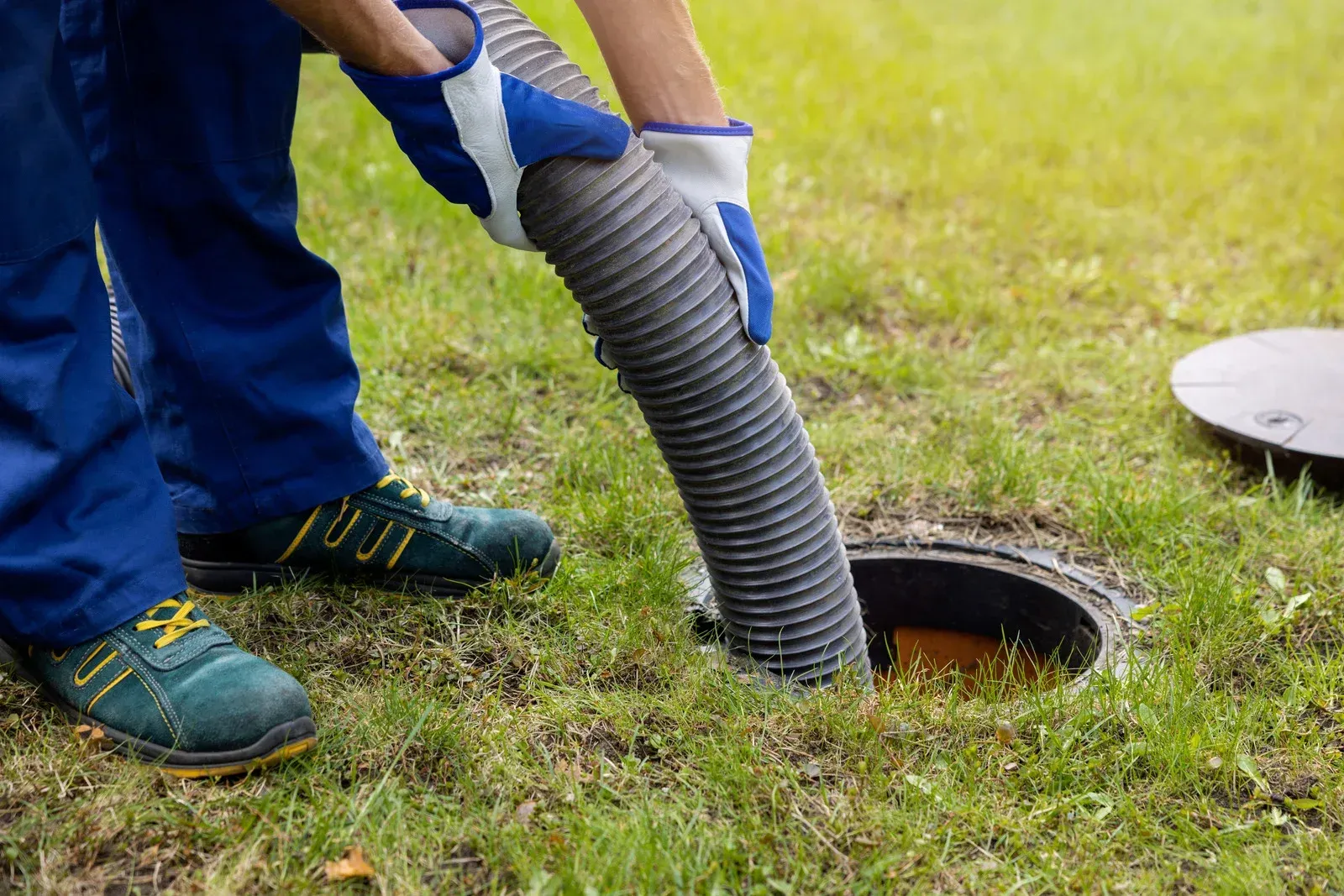
There is also the matter of what is causing it. If roots or a failing pipe are behind it, the problem will keep returning, or worsen, until the underlying cause is dealt with. A plumber can camera-scope the main line to see exactly what is going on, roots, grease, a belly, a crack, and match the fix to it, whether that is professional drain clearing, hydro jetting, root removal, or pipe repair. That diagnosis is what turns a recurring, worsening problem into a solved one.
Warning: If drains are backing up and you see or smell sewage coming up through the lowest drains, stop running water in the house, that adds to the backup, and treat it as urgent. Avoid contact with the backed-up water, which is a health hazard, and don't keep using harsh chemical drain cleaners on a main-line blockage, as they're often ineffective on roots or structural problems and can sit in standing water. A main-line backup is a call for prompt professional help.
Frequently Asked Questions
Why are all my drains slow at the same time?
Because they all empty into one shared main sewer line, and that line is blocked or failing. Individual fixture clogs affect one drain; a main-line problem restricts flow for the whole house at once. When the symptom is house-wide, the cause is the common pipe they all drain into.
How do I know it's the main line and not separate clogs?
Look for multiple fixtures slow together, the lowest drains (basement floor drain, first-floor toilet) backing up first, gurgling or a toilet rising when you run the washer or another fixture, and backups when using a lot of water. Those cross-connections and the shared timing point to the main line, not isolated clogs.
What usually blocks a main sewer line?
Common causes are tree-root intrusion through pipe joints, grease and buildup narrowing the pipe over time, flushed wipes and items that snag, and structural problems like a bellied, cracked, or collapsed pipe. Roots and pipe issues are why a main-line blockage often needs more than simple clearing.
Can I fix a main-line clog with a plunger or drain cleaner?
Usually not. Plunging works on local fixture clogs, not a blockage in the shared main line, and chemical cleaners are often ineffective on roots or structural problems and can sit in standing water. A main-line blockage typically needs professional clearing or hydro jetting, and a camera scope to find the cause.
How urgent is it?
It's worth addressing promptly. A restricted main line is heading toward a full blockage, and when it blocks, wastewater backs up into the house, a messy, unsanitary, damaging sewage backup. The slow-drain stage is your warning to clear or repair the line before that happens.
Why does the problem keep coming back after clearing?
If roots or a failing pipe are the cause, clearing alone is temporary, roots regrow and a bellied or cracked pipe keeps trapping waste. That's why a camera scope matters: it identifies if you are dealing with a recurring root problem or a structural one that needs repair, so the fix actually lasts.
Does a recurring clog ever mean a problem with the main line?
It can. When clogs keep returning across multiple fixtures, or the same drain re-clogs no matter what, the issue may be deeper in the main line, from buildup, roots, or a pipe problem, rather than the individual drain. That's exactly the kind of thing a proper diagnosis and camera inspection are meant to find.
Getting Ahead of a Backup
When every drain in the house slows at once, your plumbing is telling you the problem is not at the fixtures but at the main line they all share. The signs, multiple drains affected, the lowest ones backing up first, gurgling and cross-reactions between fixtures, point straight to that shared pipe, and the causes, roots, grease, or a failing pipe, mean it usually needs proper diagnosis and clearing rather than a plunger. Most importantly, house-wide slow drains are an early warning before a sewage backup. Act on that warning, and you clear the line on your terms instead of cleaning up a mess on the worst day.
Clear the main line before it backs up into your home — When every drain slows at once, the main sewer line is blocked or failing, and the next stage is a sewage backup you don't want. With 20
years of experience, Sinks & Sewers LLC
provides
main sewer line cleaning for homeowners throughout Columbiaville and Otisville, Michigan, using camera inspections to identify whether the problem is caused by roots, grease, or a failing pipe and fixing the cause, not just the symptom. Reach out to schedule a main-line diagnosis and get ahead of the backup.